Raising children in 2026 comes with new challenges: screens are everywhere, routines are often rushed, and parents are juggling work, school, and family life. While rules can help, consistent research shows that to make a well-structured daily routines & screen-time for children matter more than rigid rules. A predictable daily rhythm gives children security, supports attention, and allows them to thrive both emotionally and cognitively.
Your child’s environment is their first teacher. How a home is organized, how materials are arranged, and the predictability of daily schedules all shape focus, independence, and curiosity. Screen-time is only a small piece of the puzzle — it’s not inherently bad, but it must be balanced with active, creative, and interactive play.
This guide provides practical routines for children aged 0–8, screen-time guidelines from USA (AAP) and UK (NHS) authorities, and tips for USA & UK parents to maintain calm, focus, and joyful growth in everyday life.
Recommended Daily Schedule by Age (0–8 Years)
Creating a daily rhythm tailored to age ensures that children are stimulated appropriately without feeling overwhelmed. Below are recommended schedules, including wake-up, meals, play, learning, rest, family time, free choice, and screen-time allowances.
Toddlers (1–3 years)
| Time | Activity |
|---|---|
| 7:00 AM | Wake-up & breakfast |
| 8:00 AM | Free play (toys, blocks, tactile exploration) |
| 9:30 AM | Outdoor walk / movement play |
| 10:30 AM | Snack |
| 11:00 AM | Structured learning (songs, simple puzzles) |
| 12:00 PM | Lunch |
| 12:30 PM | Nap / quiet time |
| 2:30 PM | Creative play (art, music, sensory activities) |
| 4:00 PM | Snack |
| 4:30 PM | Storytime / interactive reading |
| 5:30 PM | Family activity / guided play |
| 6:30 PM | Dinner |
| 7:30 PM | Bedtime routine (bath, reading, soft music) |
Preschoolers (3–5 years)
| Time | Activity |
|---|---|
| 7:00 AM | Wake-up & breakfast |
| 8:00 AM | Free play / Montessori-inspired activities |
| 9:30 AM | Outdoor or gross motor activity |
| 10:30 AM | Snack & screen-free learning games |
| 11:00 AM | Storytime / literacy activities |
| 12:00 PM | Lunch |
| 12:30 PM | Nap / quiet time |
| 2:00 PM | Creative projects (art, building, role play) |
| 3:30 PM | Snack |
| 4:00 PM | STEM learning / puzzles / experiments |
| 5:00 PM | Family walk or shared activity |
| 6:30 PM | Dinner |
| 7:30 PM | Evening routine (reading, calm play) |
| 8:00 PM | Bedtime |
Early School-Age (6–8 years)
| Time | Activity |
|---|---|
| 7:00 AM | Wake-up & breakfast |
| 8:00 AM | Morning routine & school prep |
| 8:30 AM – 3:00 PM | School (with scheduled breaks & lunch) |
| 3:30 PM | Snack |
| 4:00 PM | Homework / focused learning |
| 5:00 PM | Physical activity / sports / outdoor play |
| 6:00 PM | Creative or free-choice play |
| 6:30 PM | Dinner |
| 7:00 PM | Family time / shared reading |
| 7:30 PM | Calm bedtime routine (story, audio play) |
| 8:00 PM | Lights out |
Screen-Time Guidelines
Screens are a part of modern life, but both the American Academy of Pediatrics (AAP) and the UK NHS provide guidance for children:
AAP Recommendations:
- Children <18 months: Avoid screen time (except video calls)
- 18–24 months: High-quality programming with parent interaction
- 2–5 years: 1 hour/day max, co-viewed
- 6+ years: Consistent limits; prioritize homework, sleep, physical activity
NHS Recommendations:
- Children <5 years: No more than 1 hour/day of screen-based entertainment
- 5–8 years: Balanced screen use, avoid screens before bedtime
Practical Hacks for Parents:
- Combine screen-free play with screen time: Swap one hour of passive screen use with blocks, puzzles, or creative play.
- Use screens intentionally: Story-based videos or educational videos, co-watched.
- Visual timers: Helps children know when screen time starts and ends.
- Screen-free zones: Bedrooms, meal areas, and play areas.
Screen-Free Alternatives:
- Audio storytelling or music boxes
- Sensory bins, building blocks, and art supplies
- Nature walks with observation games
- Role-playing & imaginative play
Morning & Evening Routines for Calm & Focus
Morning Rituals
- Wake children at the same time daily
- Offer breakfast as a family when possible
- Allow 15–20 minutes of free choice play to start the day calmly
- Quick tidy-up routine: children place their toys in bins → promotes responsibility
Evening & Bedtime Rituals
- Dim lights 30–60 minutes before bedtime
- Reading aloud or audio stories (screen-free)
- Encourage children to lay out clothes / school bag for next day
- Gentle stretches, bath, or calm music
- Consistent bedtime → regulates circadian rhythm
Tip: Avoid TV, tablets, or fast-paced content at least 1 hour before sleep.
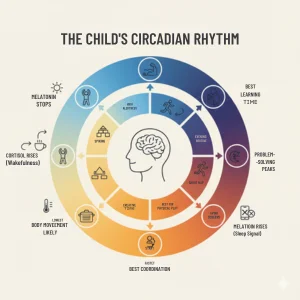
Visualizing the 24-Hour Circadian Rhythm in Children: How light exposure and screen-free routines regulate melatonin production and deep sleep cycles for thriving development.
Weekend & Holiday Modifications
Weekends and holidays allow flexibility, but routines still matter:
- Longer outdoor play: Parks, nature trails, or backyard explorations
- Educational excursions: Museums, zoos, science centers
- Family rituals: Cooking, gardening, board games
- Screen management: Limit to 1–2 hours for older children, preferably educational or interactive content
- Rotate toys or materials weekly to maintain interest
Example Weekend Structure:
| Time | Activity |
|---|---|
| 8:00 AM | Wake-up & breakfast |
| 9:00 AM | Outdoor exploration |
| 11:00 AM | Creative indoor play |
| 12:00 PM | Lunch |
| 1:00 PM | Reading / quiet time |
| 2:00 PM | Educational excursion or project |
| 4:00 PM | Snack & free play |
| 6:00 PM | Dinner |
| 7:00 PM | Family activity / storytelling |
| 8:00 PM | Bedtime routine |
Country-Specific Notes
USA
- School schedules: Many preschools start at 8:30–9:00 AM; public primary schools at 7:30–8:00 AM
- Nap routines: Toddlers may still require mid-day naps; preschoolers optional
- Daylight considerations: Seasonal changes may affect wake-up & outdoor play; adjust outdoor time accordingly
UK
- Nursery vs. Primary School: Nursery often shorter hours, more flexible play-based schedules
- School timings: Primary school starts ~8:45–9:00 AM, finishes 3:15 PM
- Outdoor play & daylight: Winters are darker — encourage indoor creative play in afternoons
Tip: Adjust daily routines & screen-time for children including daylight savings, cultural holidays, and seasonal activities to maintain predictability for the little minds.
Final Thoughts
Routines and screen-time management are tools for supporting independence, attention, and creativity. They are not rules for punishment — they are scaffolds that allow children to thrive.
By combining age-appropriate schedules, intentional screen limits, and predictable morning and evening rituals, USA and UK parents can create a stable, stimulating, and joyful environment. Screen-time is only one piece of healthy development — your presence, guidance, and thoughtfully designed environment remain the true drivers of success.